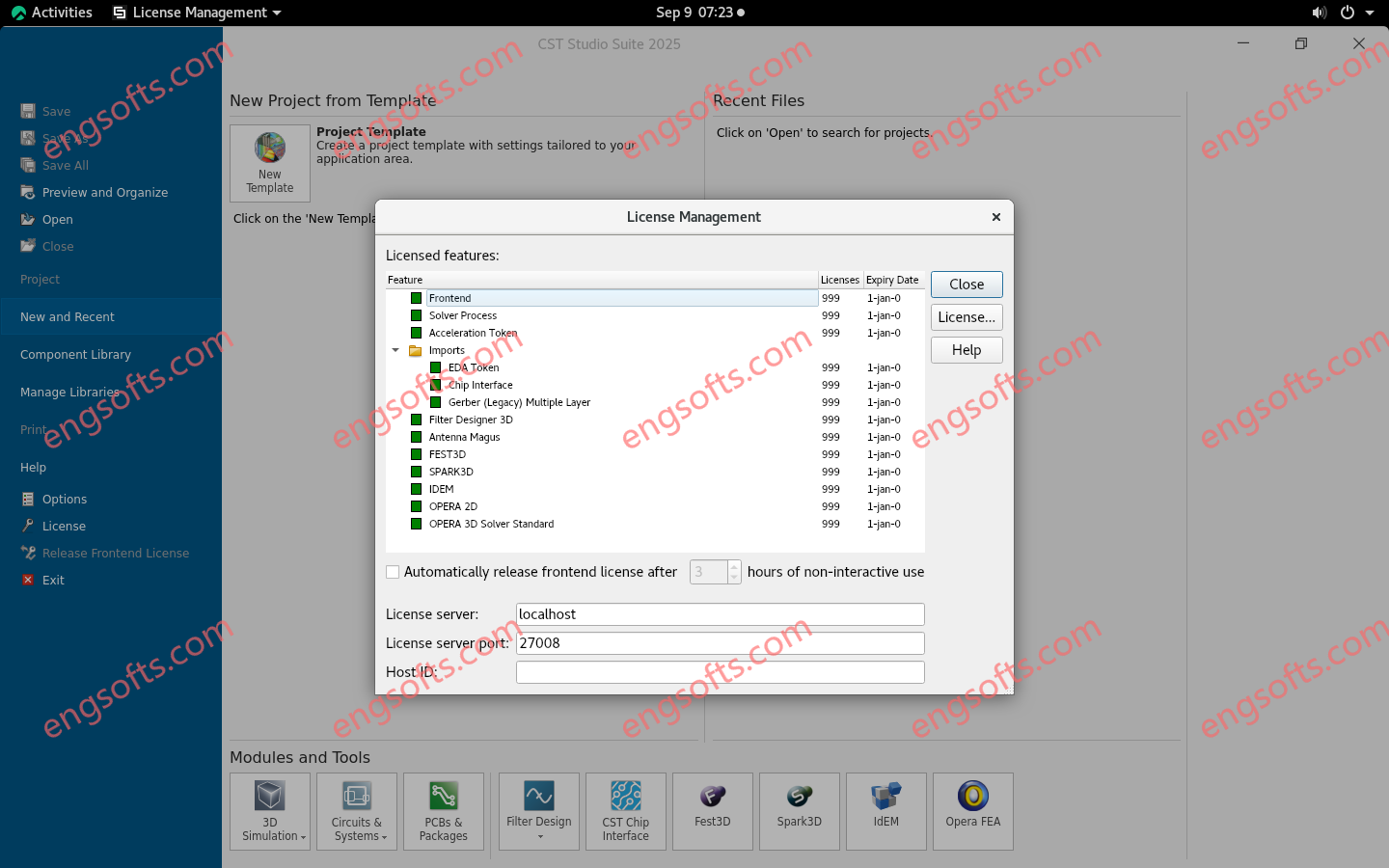
CST Studio Suite 是一款一流的电磁和多物理场仿真软件包,被全球领先的科技和工程公司广泛使用。CST Studio Suite 的求解器覆盖整个频率范围,提供丰富的工具用于产品设计、分析和优化;现在,它还可以与 3DEXPERIENCE 平台集成,实现协作工作流程。推荐使用 64 位 Red Hat Enterprise Linux 和 Suse Linux Enterprise 版本。有关支持的版本的更多信息,请参阅[此处]。 the supported OS guide. 可用版本: 2025 , 2024 , 2023 , 2022 ,… CST Studio Suite 2025 SP5 Linux64 Tested Picture CST Studio Suite 的单一用户界面集成了适用于整个电磁波谱应用的电磁场求解器。这些求解器可以耦合执行混合仿真,使工程师能够以高效便捷的方式分析由多个组件构成的完整系统。与其他 SIMULIA 产品协同设计,可将电磁仿真集成到设计流程中,并从早期阶段就驱动开发过程。 电磁分析的常见主题包括天线和滤波器的性能和效率、电磁兼容性和干扰 (EMC/EMI)、人体暴露于电磁场的情况、电机和发电机中的机电效应以及高功率器件中的热效应。 CST Studio Suite 同时支持 Windows 和 Linux 系统。在 2025 版本中,Linux 用户的体验得到了多项改进。有关功能和改进的完整列表,请参阅新版本随附的发行说明。 入门指南和示例 使用仿真进行设计决策时,正确设置模型至关重要。为了支持和指导用户,CST 提供了多本“入门指南”书籍,组件库中现在包含 500 多个可直接运行的仿真模型。这些模型可以帮助您了解最新版本 CST Studio Suite 的功能,以及如何开始建模和仿真设置。 如果您需要更多帮助,TECHNIA 提供经 Dassault Systèmes 认证的 CST Studio Suite 培训和支持。 Python CST 应用程序更新 最新版本中提供了更多 Python CST 应用程序,带来了新功能和更佳的性能。现在可以使用许多新方法编写自己的 Python 脚本,尤其是在查看 PCB Studio 和 Design Studio(CST 的原理图部分)时。对于 3D 仿真工作室/模块,大多数查询功能都已实现,包括结果获取。3D 建模仍然通过嵌入 VBA 代码来实现。 天线、射频组件和高频求解器 时域求解器 使用 T 求解器对单元结构进行(窄带)仿真,并应用 Floquet 边界条件 现在可以使用 TLM 求解器顺序激励多个同时激励列表 改进了 TLM 离散器和求解器初始化在复杂模型方面的性能 F 求解器 改进了使用四面体网格的方法的性能,尤其是在网格生成和细化过程中的曲率计算 为预定义频率采样提供多频自适应四面体网格细化选项 F 求解器 DDM(域分解方法) 进一步改进的性能 域分解求解器...
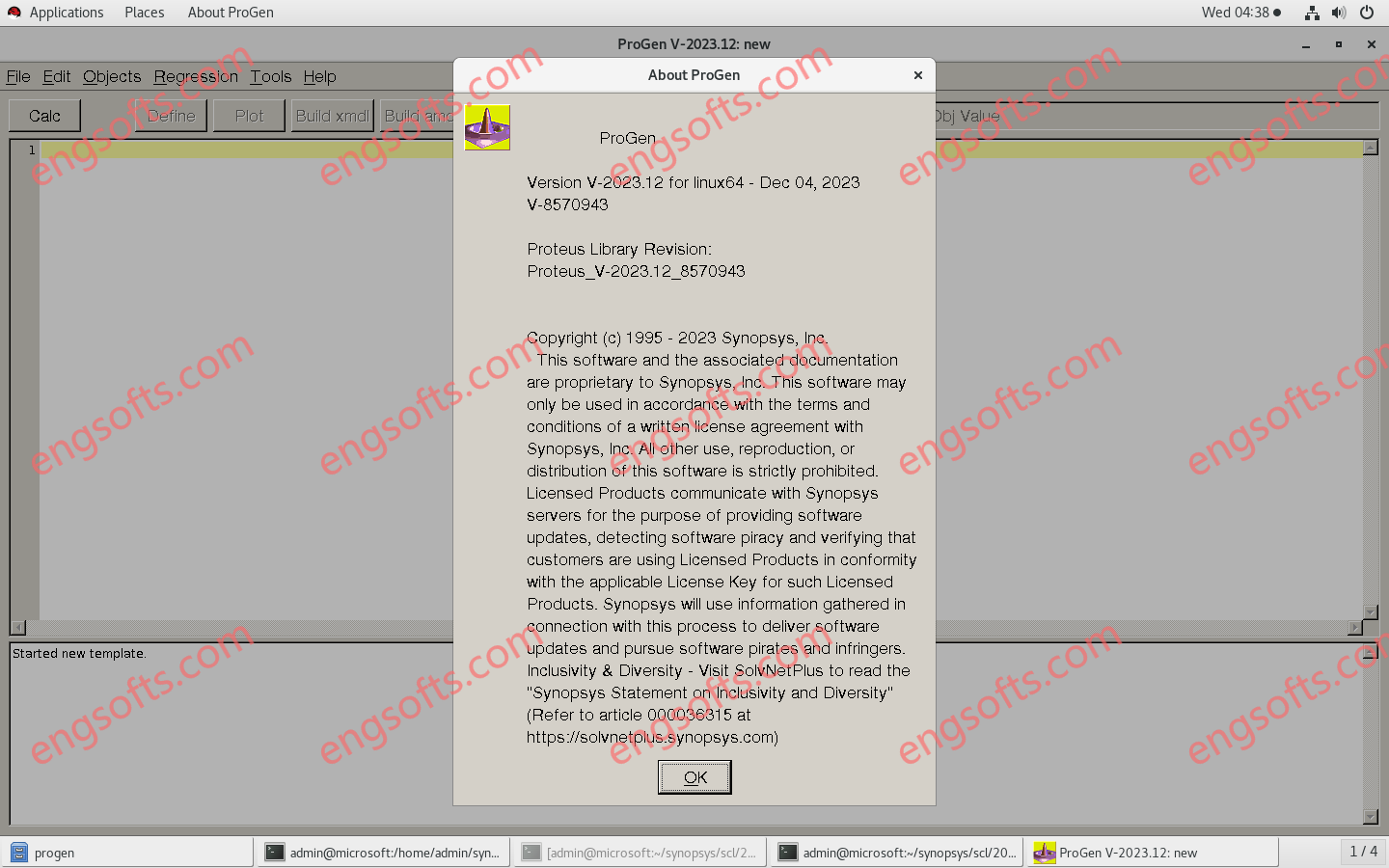
Proteus ProGen models are empirical compact models reflecting the performance of a lithography process. Model parameters are determined by fitting experimental data. The Proteus Modeling Platform (PMP) provides a single environment for calibrating those parameters with a high degree of automation and tuning them for optimum performance in downstream applications. Synopsys ProGen 2023.12 Linux64 Tested Picture ProGen, Proteus’ highly customizable solution calibrates a single model that is utilized by both the space- and frequency-domain engines.
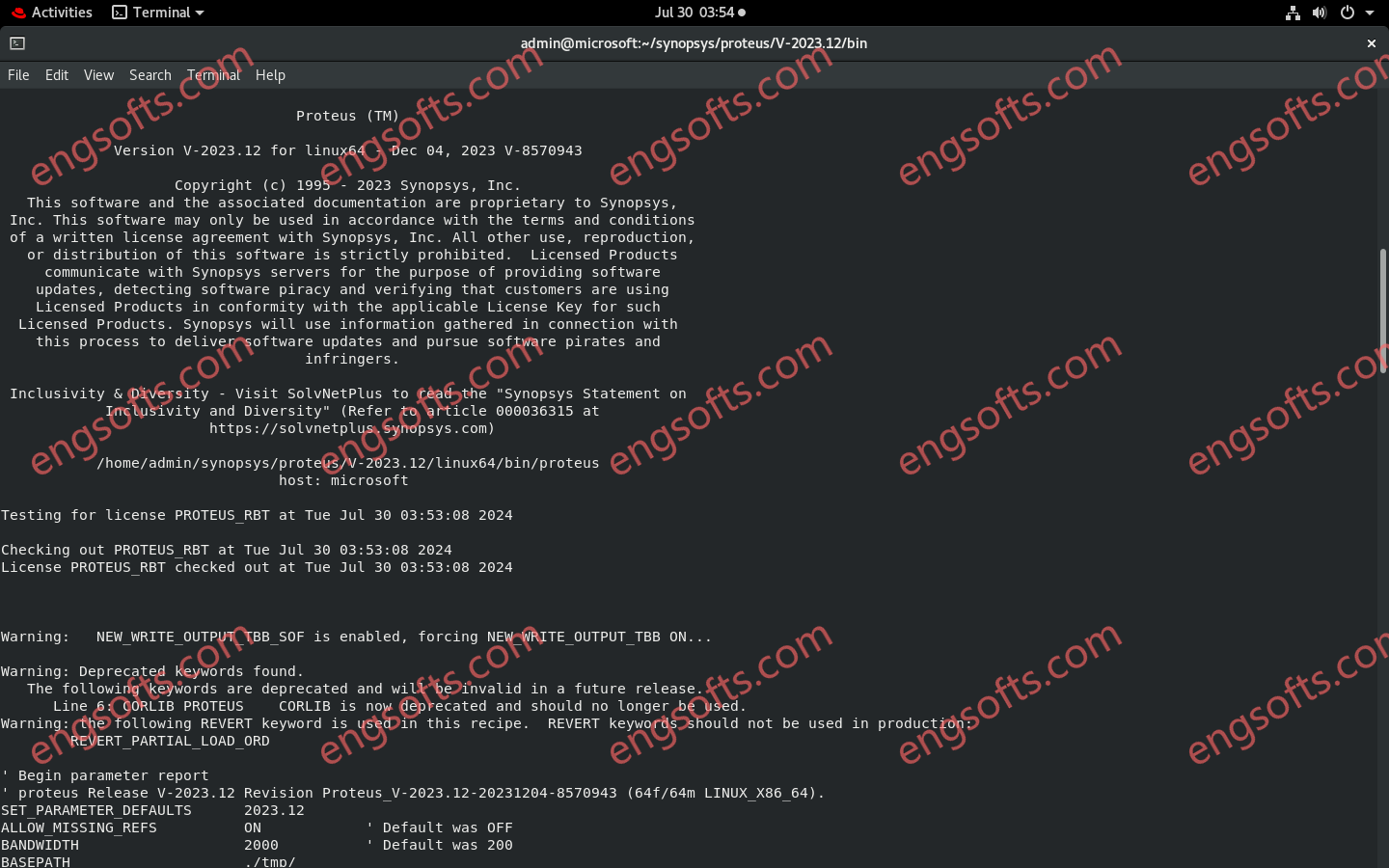
Synopsys Proteus™ full-chip mask synthesis smart manufacturing solutions enabling technologies down to 3nm and below. With the Synopsys Proteus family you can achieve exceptional precision, efficiency and speed in proximity correction, model building for correction, and analyzing proximity effects on corrected and uncorrected IC layout patterns, revolutionizing your chip fabrication process. The Synopsys Proteus full-chip mask synthesis family are the products of choice for leading edge IDMs and foundries and have been production proven for two decades with support for the latest EUV lithography processes. Synopsys Proteus 2023.12 Linux64 Tested Picture Key Benefits Largest Lithography Entitlement Industries first and most deployed inverse lithography solution with native curvilinear design and mask support. Fast Turn Around Time AI driven solutions with advanced...
Synopsys 3DIC Compiler, a unified exploration-to-signoff platform, delivers the highest levels of design efficiency for capacity and performance. It leverages a common data-model to integrate design, die-to-die routing, native system analysis, verification, and signoff in a single environment. Synopsys 3DSO.ai, industry’s first autonomous AI optimization solution for 2.5D and 3D heterogeneous design and integration, seamlessly integrates with 3DIC Compiler to maximize system performance and quality of results at a rapid pace for thermal integrity, signal integrity, and power network design. Ensuring system technology co-optimization (STCO), Synopsys 3DIC Compiler is certified by all foundries and leveraged successfully by customers in dozens of designs. Key Benefits Unmatched Scalability System-of-chips integration over hundreds of billions of transistors High Productivity Fast exploration and design...
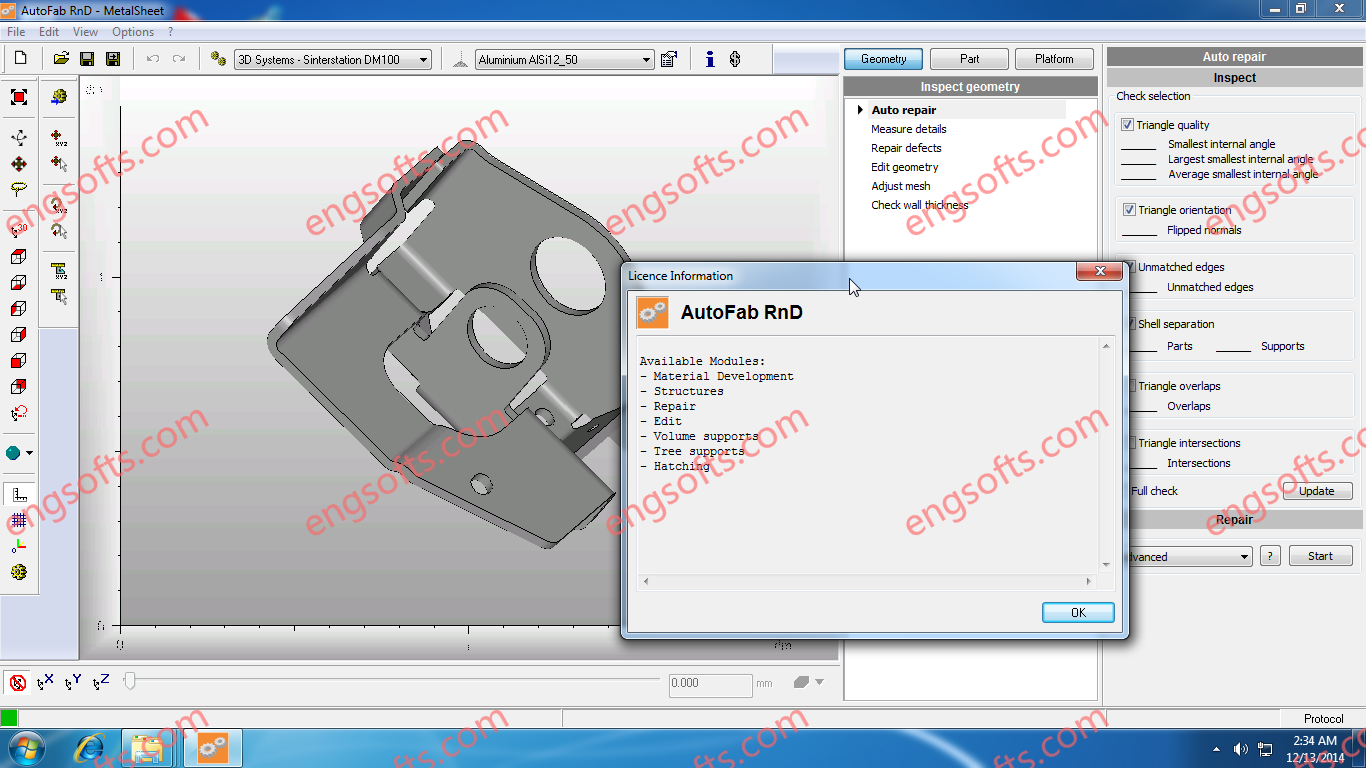
AutoFab was specially developed for manufacturing metal products by laser melting process and sintering processes, making AutoFab the link between the 3D design and the Additive Manufacturing system. Available versions: 1.9 , 1.8 Marcam Engineering AutoFab 1.9 Tested Picture The software clearly demonstrates technological knowlegde and produces optimized manufacturing data in the shortest time possible. It provides proven solutions for a production-oriented data preparation, focussing on optimum part quality. Solutions like the hull-and-core strategy or internal structures enable a significant reduction in build time, material and weight at a simultaneously high surface quality. AutoFab‘s support technology especially engineered for metal based laser melting and sintering processes. It allows a simple and fast removal of supports without residues. Guaranteed faultless material...
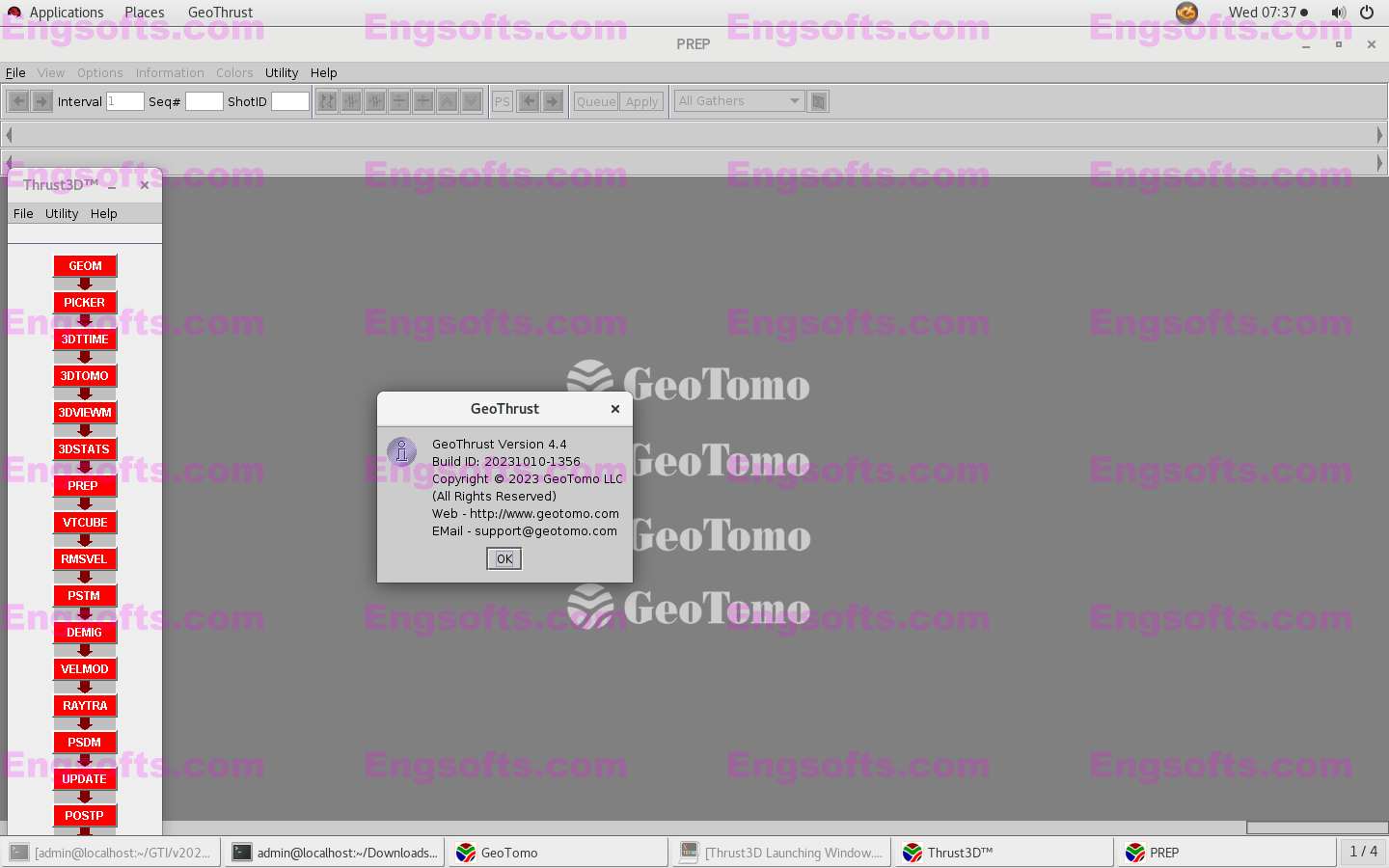
GeoThrust has been designed with a workflow architecture to obtain an accurate earth model and earth image in time and in depth from data recorded with irregular geometry in areas with rough topography, complex near-surface, and complex subsurface, with uncompromisingly high technical specifications for data analysis and quality control, but easy to learn and easy to use. DISTINCTIVELY UNIQUE FEATURES The near-surface model is estimated by nonlinear tomography applied to first-arrival times that accounts for topography and resolves lateral and vertical velocity variations. Aside from statics corrections, the corrections for the near-surface are performed by wavefield datuming — an essential requirement for imaging from irregular topography. GeoThrust performs subsurface velocity estimation, modeling and imaging from topography, not from a flat...